ServicesConstruction Debris
Construction Debris Removal in Conyers
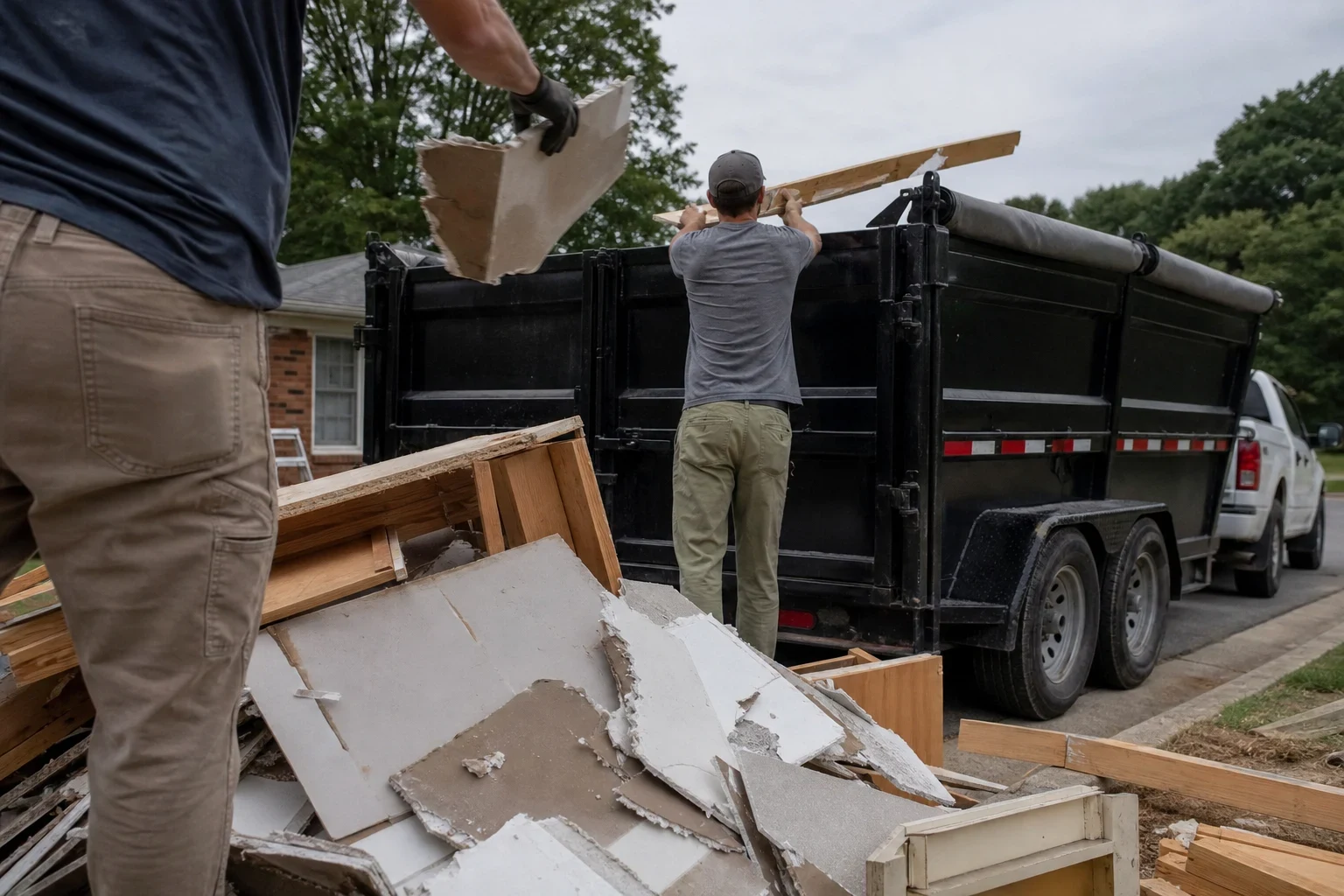
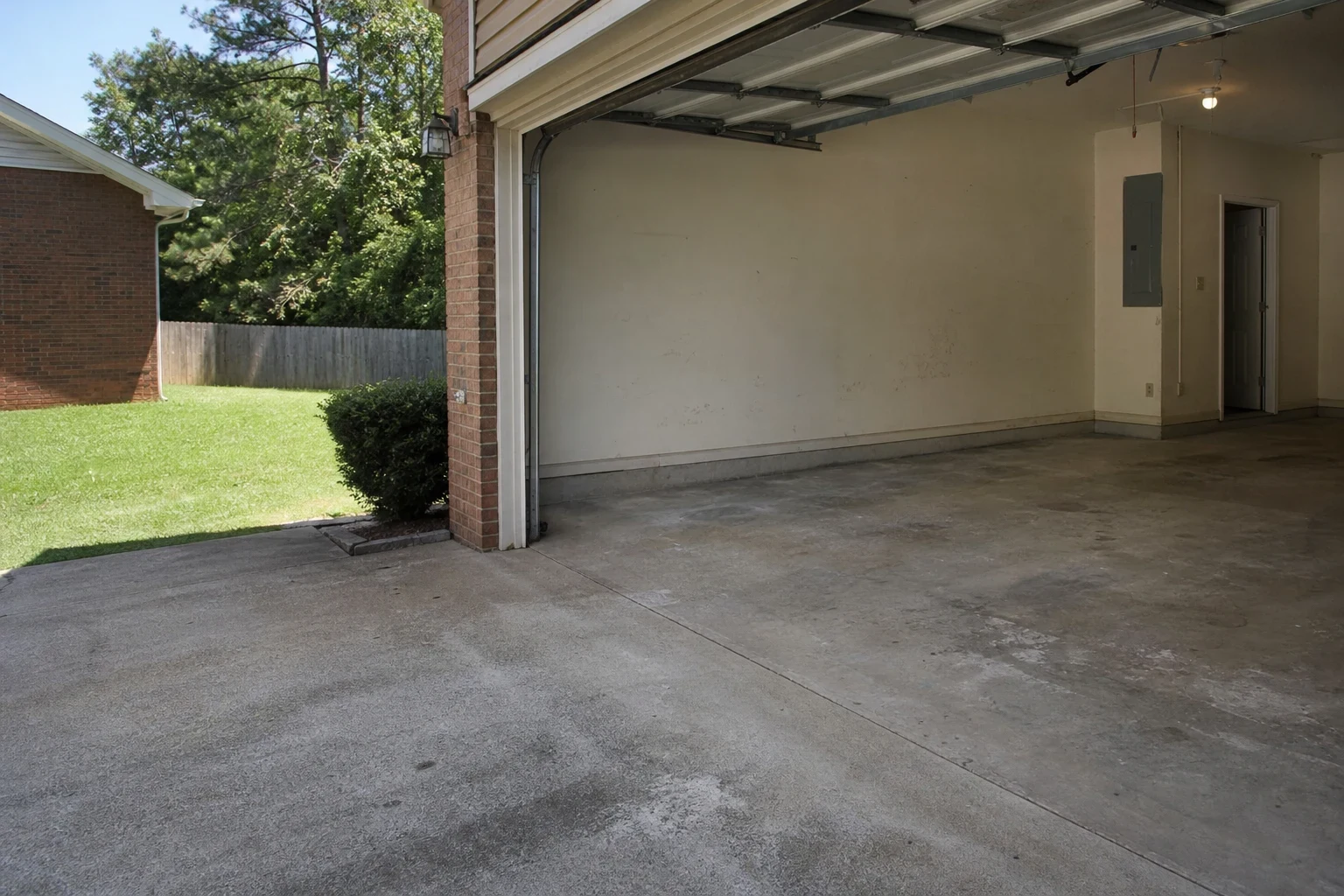
When the remodel is done but the driveway is buried in drywall scraps, broken tile and old cabinets, we load it, sort it by material and haul it off. You get a clear yard and a clean garage floor, plus an upfront price before anything is lifted.
What we clear after a project
Construction debris is the heavy, awkward leftover from work on your home: torn-out drywall, framing lumber, flooring, tile, shingles, old vanities and the odd chunk of concrete. It does not belong in your trash cart, and most of it is too heavy or too sharp to haul in a family car.
Each material behaves differently, and that shapes how we handle it. Drywall turns soft and twice as heavy once it has sat out in a Georgia rainstorm. Lumber from a demo usually still has nails in it. Tile and concrete are small in volume but dense, so they fill a truck by weight long before they fill it by space. We look at what you have, load it in the right order and keep usable wood and metal separate so it can be recycled where possible.
This service suits homeowners finishing a DIY remodel, and anyone whose contractor left the cleanup out of the bid. If the leftovers are mostly household items rather than building scraps, our general junk removal page may fit better.
What the work includes
Drywall and plaster
We bag loose gypsum dust and stack sheets flat so they break less on the way out. Wet board is handled separately because of its weight.
Lumber and trim
Framing, subfloor, decking boards and trim, with exposed nails turned in or bent over before carrying so nobody gets cut.
Tile, stone and concrete
Ceramic and porcelain tile, broken countertops, pavers and small concrete pieces. We load dense pieces low and spread them across the truck bed.
Roofing and siding scraps
Asphalt shingles, felt underlayment, vinyl siding and aluminum flashing, picked up from the yard and the beds along the foundation.
Fixtures and cabinetry
Old vanities, cabinets, toilets, sinks, doors and windows from a gut job. Metal pieces are set aside for scrap recycling.
Sweep-up
After the last load we sweep the area we worked in and do a pass for stray screws and nails on the driveway.
Signs it is time to call us
- The pile is growing
- Each weekend of work adds another layer, and the stack by the garage is starting to block a parking spot.
- Rain is in the forecast
- Open drywall and cardboard soak up water fast, get heavier and start to smell. Clearing it before a storm keeps the job simpler.
- Nails in the grass
- Demo lumber left on the lawn sheds fasteners, which is hard on bare feet, tires and mower blades.
- The contractor did not include haul-off
- Some bids cover the build but not the cleanup. We can step in once the work is finished.
- Your HOA has sent a reminder
- Visible debris tends to draw notice. A single visit usually takes care of it.
How a debris pickup runs
- 1
Phone call and estimate
You tell us what the project was and roughly what is left. We come out for a free, no-obligation on-site estimate and give you an upfront price with no hidden fees.
- 2
Walk-through on the day
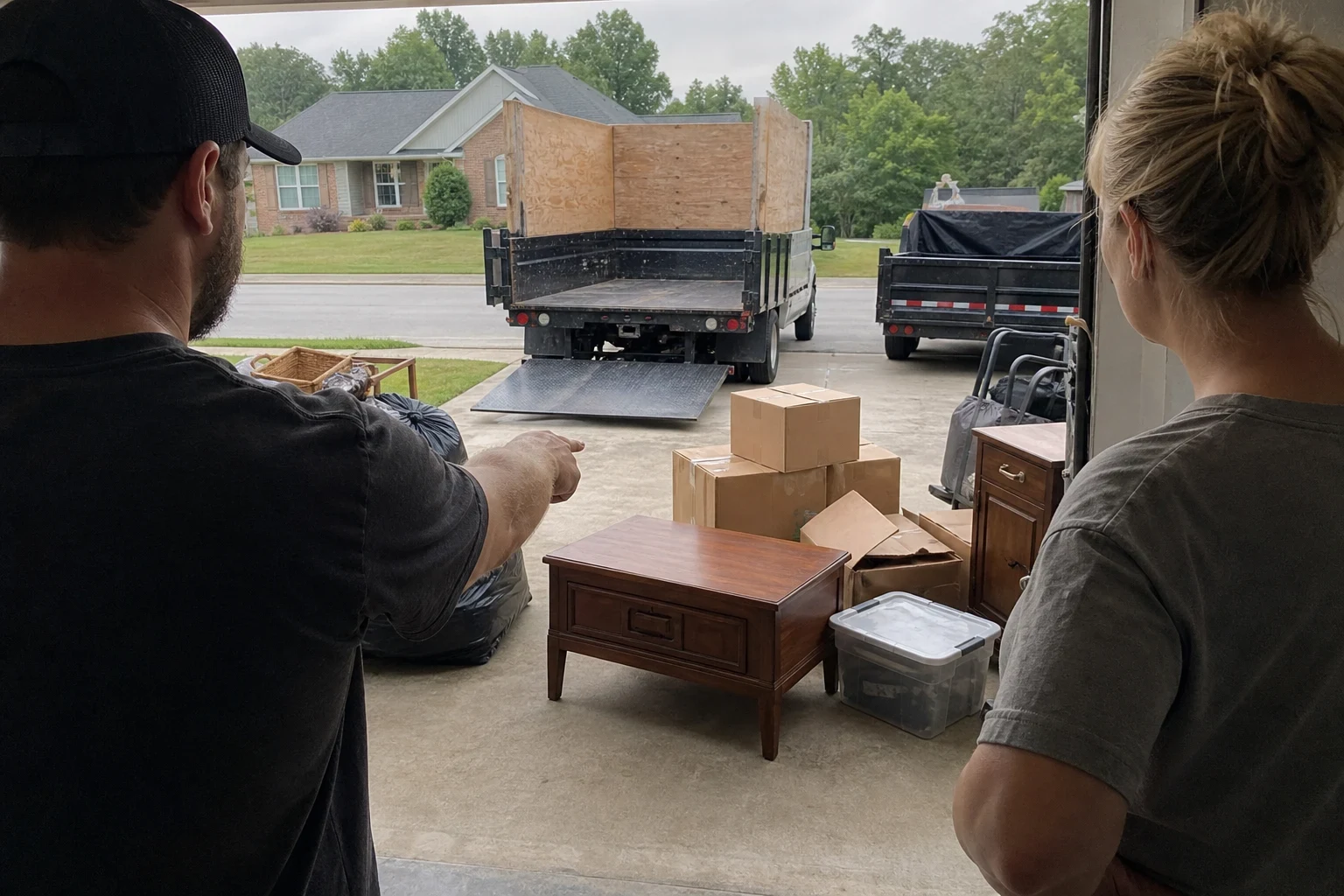
Our crew confirms what goes and what stays, then plans a path from the pile to the truck that avoids soft lawn and fresh paint.
- 3
Sort and load
Heavy pieces go in first and low, with bulky light items on top. Clean wood and metal are kept apart for recycling.
- 4
Clean finish
We sweep the work area, check for stray nails and leave the space ready for you to use again.
What moves the price
Construction debris is priced by how much of the truck it takes up, with weight playing a bigger role than it does for furniture or boxes. We see the pile in person before quoting, and the price we give is the price you pay.
- Volume
- The main driver is how much space your debris fills in the truck. A bathroom gut takes far less room than a whole kitchen.
- Material weight
- Tile, concrete, plaster and wet drywall are dense. A small pile of them can weigh as much as a large pile of lumber.
- Access
- Debris in a backyard, basement or upstairs room takes longer to carry out than a pile at the end of the driveway.
- Sorting needs
- Mixed loads with nails, insulation and trash tangled together take more time to separate than neatly stacked piles.
Construction debris questions
- Do I need to sort the debris before you come?
- No. It helps if you keep tile and concrete in one spot and lumber in another, but our crew sorts as we load. Just let us know about anything you want to keep.
- Is there anything you will not take?
- Liquid paint, solvents and other chemicals need separate handling, and so does anything you suspect contains asbestos. Tell us about these on the phone so we can talk through your options before the visit.
- Can you take a pile of old concrete or brick?
- Usually, yes, as long as the pieces can be lifted by hand. Because concrete is so heavy, we look at it during the estimate to make sure the price reflects the weight.
- Will the truck damage my driveway or lawn?
- We park on the street or a firm part of the driveway and carry debris to the truck rather than driving across grass, especially after rain when red clay soil is soft.
- Do you work in nearby towns too?
- Yes. Along with Conyers, we pick up debris in Covington, Lithonia, Snellville, Loganville and other towns listed on our service areas page.
Ready to clear the leftovers from your project
Tell us what was torn out and where it is sitting. We will come take a look, give you a clear price and handle the heavy part.